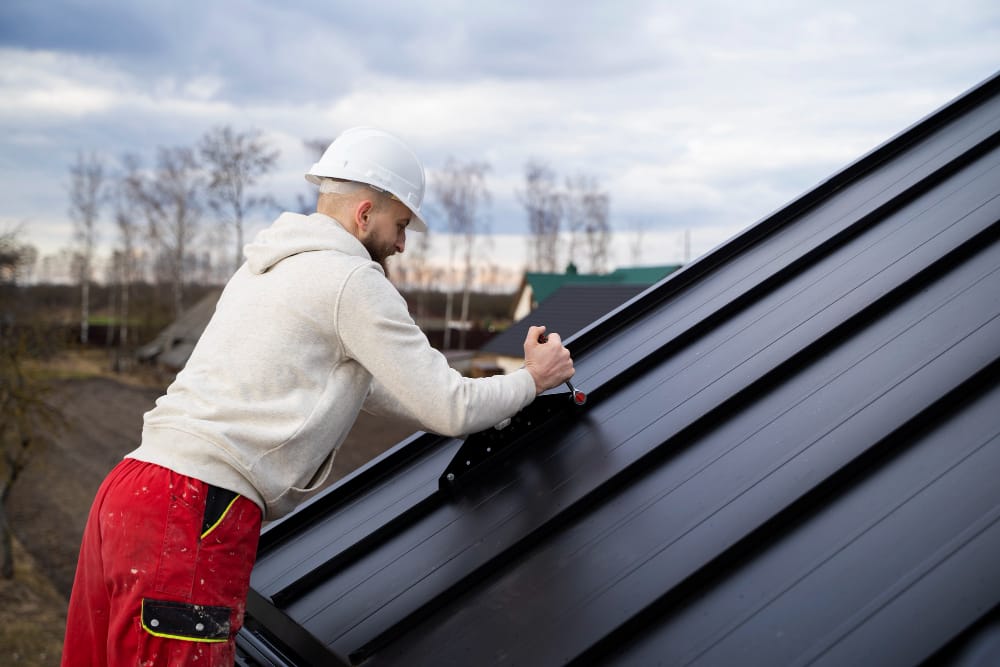
*The finest commercial roof systems often look remarkably simple only because their complexity has been resolved before the finished surface appears.*
The Beauty of a Continuous Surface
Single-ply roofing is a broad category of flexible membrane systems used extensively on low-slope commercial buildings. TPO, PVC, and EPDM are among the best-known materials within that category, yet the term “single-ply” should not suggest that all three systems are interchangeable. Their material chemistry, seam methods, specifications, and installation requirements differ, and each proposed assembly should be evaluated for the particular building it is intended to protect.
What unites them is a philosophy of continuity. Rather than constructing the visible waterproofing surface from numerous layers of asphalt-based roofing, a single-ply system relies on a manufactured membrane installed across the roof and carefully integrated at its seams and transitions. The result can possess a striking visual clarity—particularly across expansive commercial roof areas where uninterrupted fields of membrane create a disciplined, almost architectural geometry.
But appearance is secondary. A roof is ultimately judged by performance, not visual purity. Sacramento commercial buildings can contain extensive HVAC equipment, vents, pipes, drains, curbs, parapets, and other components that interrupt the clean membrane field. Each interruption becomes a technical detail that must be resolved.
This is where simplicity reveals its sophistication. *The uninterrupted portion of a membrane may dominate the view, but the smaller transitions often demand the greater concentration of craftsmanship.*
“A single-ply roof earns its elegance not through decoration, but through continuity—every seam, edge, and penetration resolved as part of one protective plane.”
Where Precision Becomes Performance
Walk across a newly completed single-ply commercial roof and your eye naturally follows the broad surface. A roofing professional, however, is likely to notice something else first: seams, penetrations, flashing, drainage points, roof edges, and transitions around mechanical equipment.
For thermoplastic single-ply systems such as TPO and PVC, compatible membrane seams are commonly joined through heat welding. This process is one of the defining characteristics of these systems, creating connections between membrane sheets according to the requirements of the specified product and assembly. EPDM follows a different material and seam approach, reinforcing why single-ply should be understood as a category rather than one universal roofing product.
Then there are the penetrations. An HVAC unit may sit quietly above the building, but its curb creates a relationship between mechanical equipment and roofing. Pipes and vents interrupt the membrane in smaller ways. Drains and scuppers must participate in moving water away from the roof. Parapets and edges create transitions between horizontal and vertical surfaces.
*None of these details is decorative, yet together they define the refinement of the finished system.*
This is also why installation quality deserves equal standing with material selection. A recognizable membrane brand or specification cannot independently resolve poor preparation or careless detailing. The material and workmanship function together, and the completed roof inherits the strengths—or weaknesses—of both.
For owners evaluating Single Ply Roofing Sacramento, proposals should therefore explain more than membrane type. How will the roof be prepared? What assembly is being proposed beneath the membrane? How will rooftop equipment, drains, edges, and penetrations be addressed? What attachment method is appropriate for the specified system and building?
Those questions move the conversation away from buying a product and toward understanding an assembly.
Sacramento Sun Changes the Conversation
Sacramento’s long, bright summers give roof-surface characteristics particular relevance. Certain single-ply systems are readily available in light-colored, highly reflective surfaces designed to reflect a substantial portion of incoming solar energy rather than absorbing it at the roof surface.
The visual effect is distinctive: where a dark roof can seem to absorb the intensity of a summer afternoon, a light membrane presents a cooler, more restrained architectural surface. Yet the meaningful distinction is technical rather than aesthetic. Solar reflectance and thermal emittance are measurable properties, and applicable California energy requirements may make cool-roof characteristics an important part of system selection for certain projects.
Still, sophistication requires avoiding simplistic promises. A reflective membrane does not translate into one guaranteed percentage of utility savings for every building. Insulation, HVAC efficiency, operating schedules, internal heat loads, roof-to-floor-area ratio, and numerous other variables influence total building energy performance.
“A reflective roof surface can change how a building receives the Sacramento sun, but true performance belongs to the entire building—not to one material in isolation.”
The more useful approach is to consider reflectivity as one characteristic among many. Drainage remains essential. Compatibility remains essential. Proper detailing remains essential. The existing building and the complete roof assembly remain essential.
*Luxury, in this context, is not exaggeration. It is precision in the way performance is described and restraint in the promises being made.*
The Roof Beneath the Roof
The membrane receives the attention because it is visible, but some of the most consequential decisions occur beneath it. Depending on the project, a single-ply assembly can involve insulation, substrate preparation, cover boards, vapor-control considerations, attachment components, and other layers specified for the building.
This hidden architecture matters because a membrane cannot exist independently of the surface supporting it. Existing conditions may need to be evaluated and prepared. Wet or deteriorated components cannot simply be ignored beneath a beautiful new surface. Attachment requirements must respond to the selected assembly, while insulation decisions interact with applicable code requirements and building performance objectives.
This is why asking only, “Are you installing TPO?” or “Is this PVC?” provides an incomplete understanding of a commercial roofing proposal. Two contractors can mention the same membrane category while proposing meaningfully different assemblies, preparation, detailing, or scopes of work.
Experienced commercial roofing professionals should be able to explain those layers in accessible terms. A property owner does not need to become an expert in every fastener, board, membrane, or flashing component. But the owner should understand what is being installed, what existing conditions are being addressed, and why the proposed assembly is appropriate.
There is something distinctly architectural about this hidden order. The finished roof appears calm precisely because the decisions underneath have already been made: where loads transfer, how the assembly attaches, how insulation integrates, how transitions occur, and how the membrane becomes the final weathering surface.
*What looks minimal from above may be anything but minimal in thought.*
A Quiet Standard for Modern Commercial Buildings
The appeal of single-ply roofing ultimately lies in this balance between apparent simplicity and technical depth. Large membrane fields can create an exceptionally clean commercial roof surface, while sophisticated detailing allows that surface to navigate the complicated reality of drains, equipment, penetrations, edges, and changing elevations.
There is no single-ply material that should automatically be selected for every Sacramento property. TPO, PVC, EPDM, and specific assemblies within those categories have different characteristics. Existing roof conditions, building use, drainage, rooftop traffic, mechanical equipment, applicable requirements, budget, and long-term maintenance strategy all deserve consideration.
That is why the best Single Ply Roofing Sacramento decision begins not with a favorite acronym, but with the building itself. Understand the roof configuration. Understand what lies beneath the existing surface. Consider how water moves. Map the penetrations and mechanical equipment. Review future rooftop plans. Then evaluate which complete assembly responds most intelligently to those conditions.
The finished result may never become one of the building’s most visible features. Employees will not arrive each morning admiring a perfectly executed membrane seam. Customers will not study the transition around an HVAC curb. Tenants may go years without thinking about the roof at all.
And perhaps that is the highest expression of its success.
“True sophistication in commercial roofing is not complexity for its own sake. It is the discipline of making every layer, seam, transition, and detail feel inevitable.”
A thoughtfully specified and carefully executed single-ply system does not need ornamentation to communicate quality. Its refinement is quieter: a continuous surface, purposeful layers beneath it, disciplined transitions, and a roofing assembly designed around the needs of the commercial property it protects.